Developing
The Complete
Athlete
Foundational strength, movement, and mindset training for competitive athletes ages 11–16.
We don't chase flashy workouts. We build athletic foundations that make a difference.
Foundational strength, movement, and mindset training for competitive athletes ages 11–16.
We don't chase flashy workouts. We build athletic foundations that make a difference.
Tryouts are competitive. Playing time is limited. The athletes who stand out aren't always the most talented — they're the most physically prepared. Stronger. More coordinated. More composed under pressure.
That preparation is a choice, and it starts long before the season does.
Most youth training programs focus too heavily on speed, conditioning, and flashy drills before young athletes have developed the physical foundation necessary to support them.
Before athletes can become faster, more explosive, and more powerful, they first need better body awareness, structural balance, stability, relative strength, efficient movement patterns, and the ability to produce and control force properly.
We do not chase flashy workouts or social media trends. We build athletic foundations that transfer directly into performance on the field, court, ice, and mat.
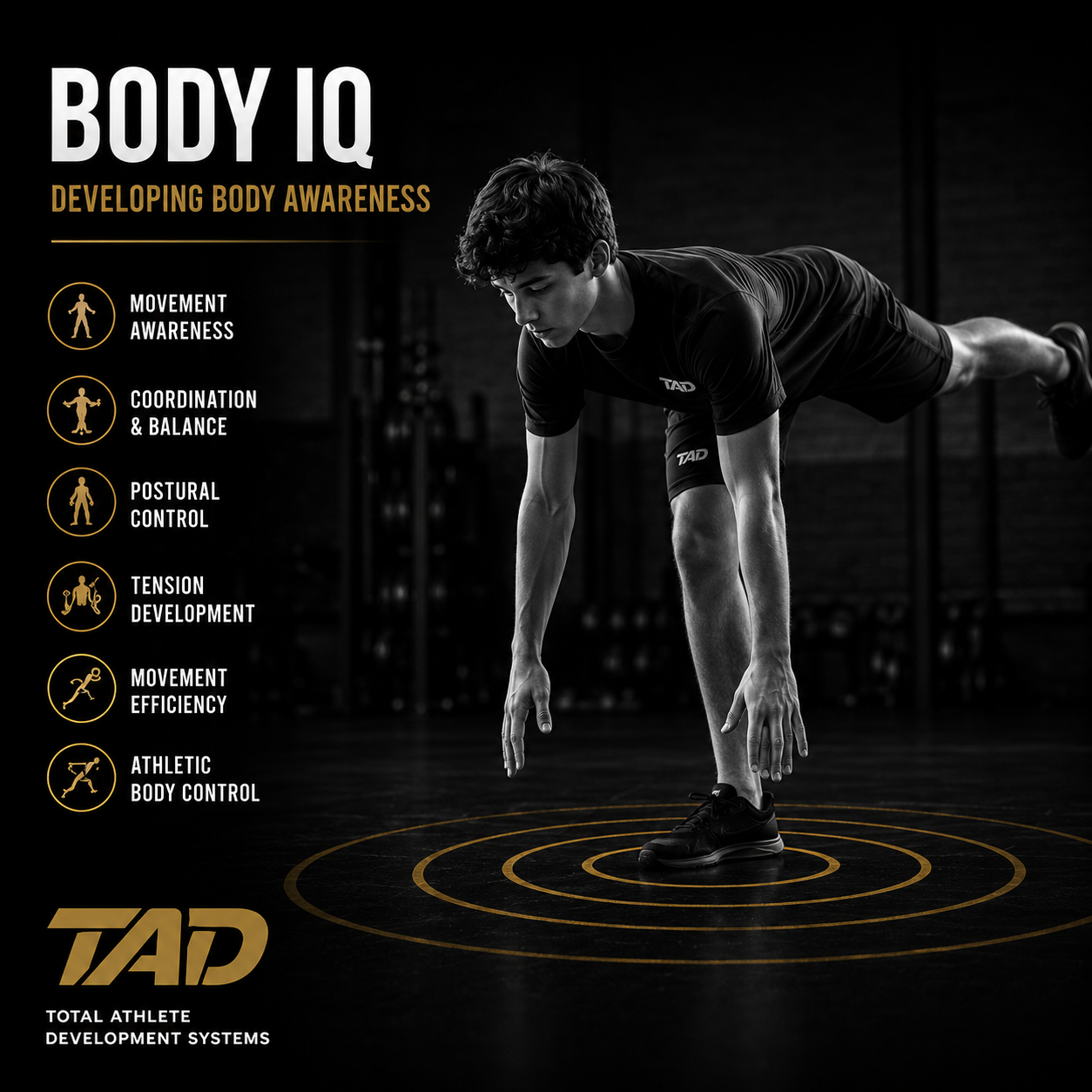
Many young athletes lack awareness and control over their own body. We help athletes develop better movement awareness, coordination, postural control, tension development, and movement efficiency. The more body awareness an athlete develops, the more efficiently they accelerate, decelerate, react, cut, and produce force.
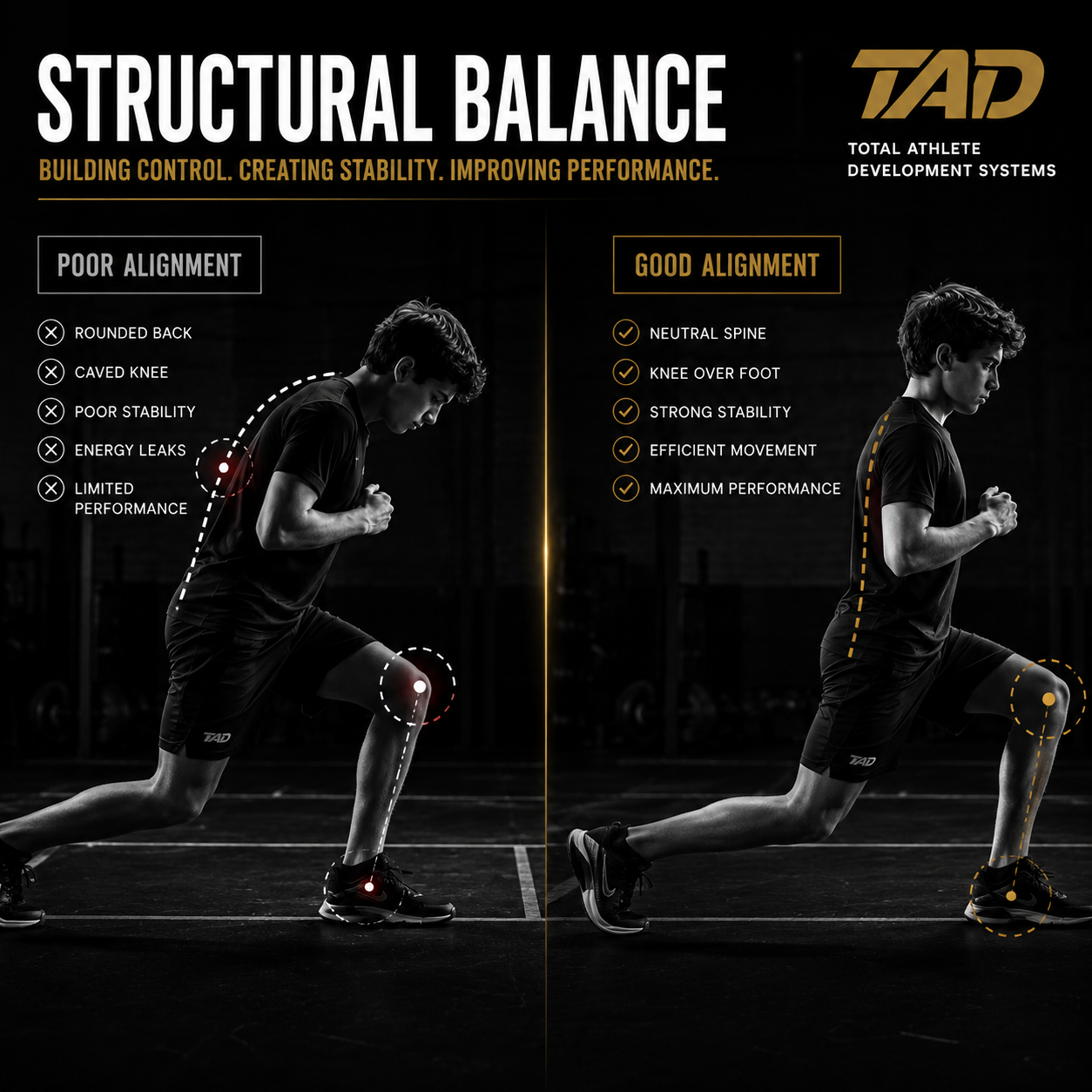
Growing athletes often lack the structural strength and stability to control movement efficiently. Connective tissues are still developing. Stabilizing muscles are weak. Core and trunk control are underdeveloped. We build structural balance throughout the body so athletes move with greater control, stability, and efficiency.
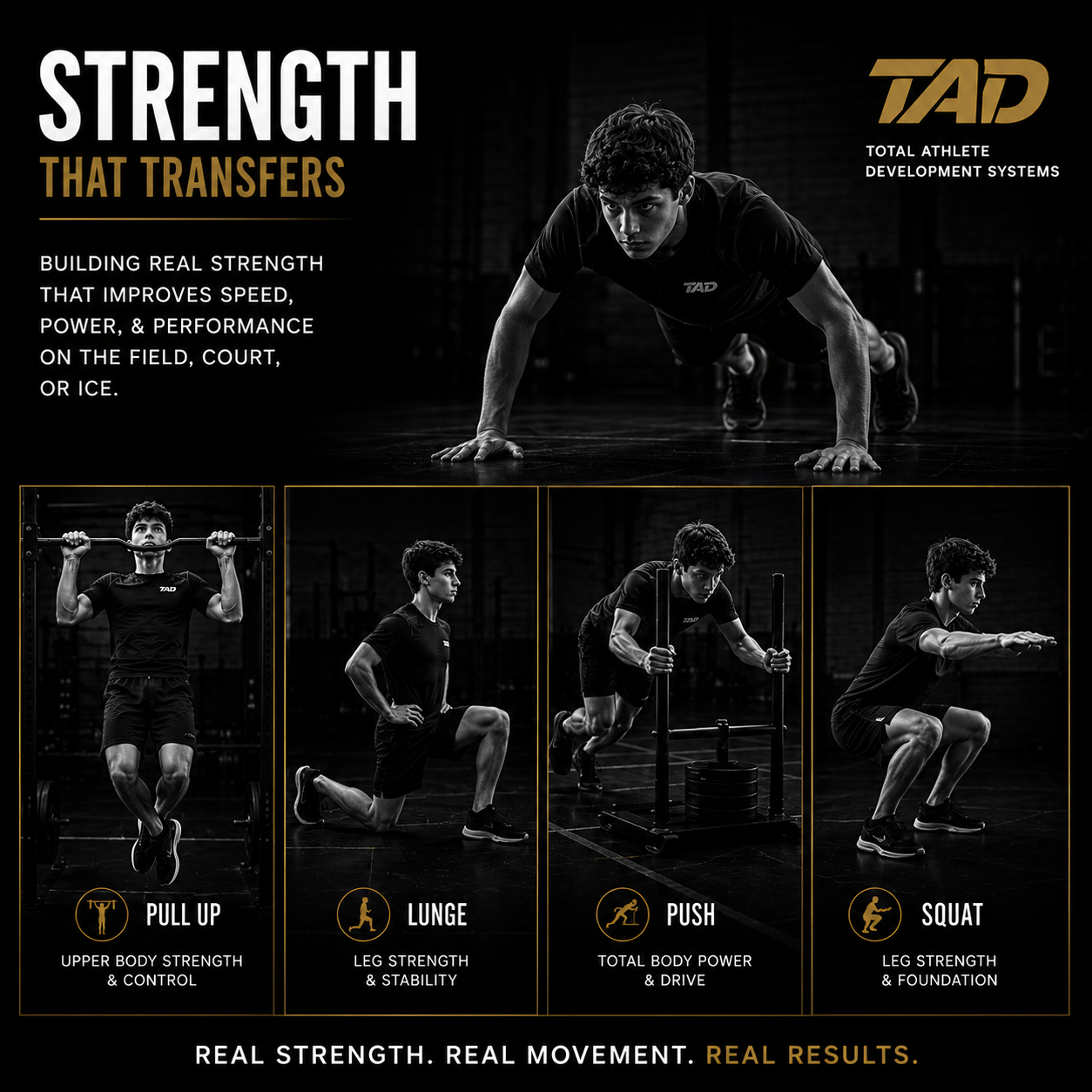
Most young athletes are weaker than they appear. When the body lacks foundational strength, force production becomes inefficient — energy leaks through instability, poor posture, and weak trunk control. We develop athletic strength that transfers directly into speed, explosiveness, stability, and movement efficiency.
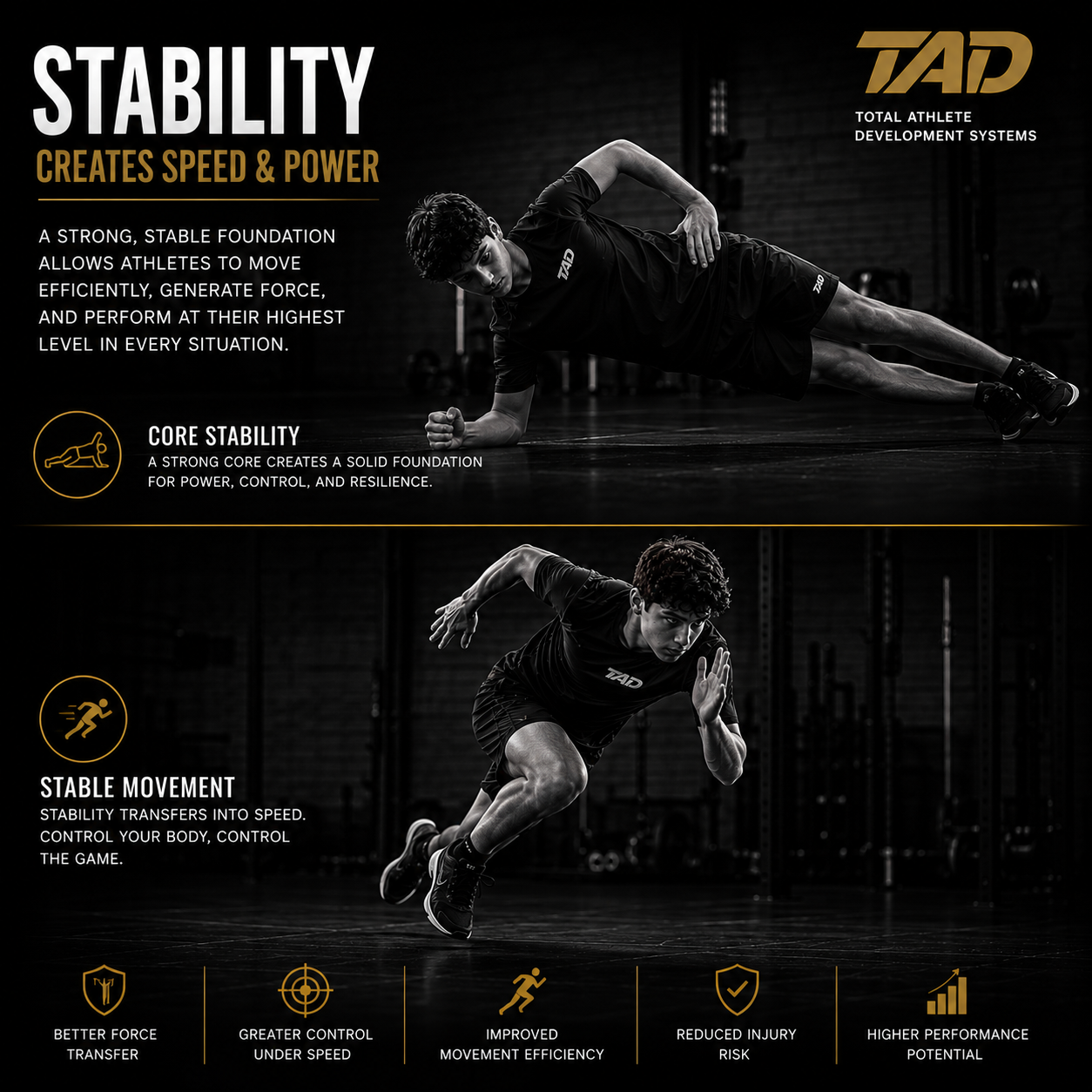
One of the most overlooked qualities in youth development is stability. When athletes lack it, the body becomes unstable, inefficient, and slower at transferring force. The more stability an athlete develops, the more efficiently they generate speed, explosiveness, and power through a properly controlled body.
Plyometrics, ladder drills, and flashy "sports performance" content may look impressive — but without a proper foundation, they fail to meaningfully transfer onto the field, court, rink, or mat. Worse, they can actively set young athletes back.
Teaching athletes to move fast before they can move well creates flawed patterns that follow them throughout their career.
Explosive training without the structural foundation to support it increases injury risk and limits actual athletic transfer.
Eye-catching content doesn't equal effective programming. Real development is unsexy — and it works.
The snatch, clean, and jerk demand exceptional mobility, coordination, and structural integrity. Loading young athletes into Olympic lifting before they've developed these prerequisites is a coaching failure — regardless of how impressive it looks on video.
Athletes can only safely express power up to the level they can absorb it. Jumping, sprinting, and change of direction all require the body to decelerate and manage ground reaction forces. Skipping deceleration training and landing mechanics exposes young athletes to unnecessary risk every time they compete.
High-intensity conditioning applied to athletes who haven't yet earned quality movement patterns simply trains them to execute poor mechanics faster and harder. You can't condition your way to good movement — but you can permanently cement bad movement with fatigue-based training.
Adult programming applied to developing bodies ignores fundamental differences in bone density, hormonal environment, neuromuscular maturity, and structural readiness. What works for a 25-year-old can be actively harmful for a 12-year-old in a critical growth phase.
Many young athletes develop significant imbalances between dominant and non-dominant sides, and between anterior and posterior muscle groups. Training through these without addressing them leads to compensatory patterns, chronic pain, and elevated injury risk as they mature.
Effective development follows structured training phases. Flat, undulating "do everything all the time" programming without periodization leads to stagnation, chronic fatigue, and athletes who plateau far earlier than they should.
We go deep on all five mistakes — with the science behind each one, what coaches should be doing instead, and the TADS principles that guide our approach.
It is built from the foundation up. Every phase of development builds upon the next. The goal is not simply to make athletes tired — the goal is to help them move better, get stronger, become more explosive, and perform at a higher level.
"We are not chasing trends. We are building athletes properly — because a well-developed athlete will always outperform a well-conditioned one."
Let's be honest about what's competing for your child's attention right now. Screens. Social media. Passive entertainment. Total Athlete Development Systems is a place where young athletes come off the screens and work on themselves — challenged, engaged, and surrounded by the right people.
At 11–16, young people need real physical challenge — not more passive consumption. Training at TADS is an active, engaging environment where athletes discover what their body can actually do. They leave tired in the best way, with a sense of accomplishment that a screen never provides.
Who your child is surrounded by at this age is one of the most powerful influences on who they become. The friendships, the standards, the culture — these shape habits and mindsets that follow them for life. At TADS, they're in a room with young people who are showing up, working hard, and striving to improve. That environment is built intentionally.
Discipline, resilience, coachability, the ability to handle pressure — these aren't just athletic qualities. They are life qualities. They're built in the moments when it's hard and your child keeps going anyway. Every session at TADS is an opportunity to practise exactly that.
Many young people reach their teens without ever truly experiencing what their body is capable of in a positive, structured environment. At TADS, athletes learn to associate physical effort with growth, progress, and confidence — not punishment. That relationship with movement is one of the greatest gifts you can give a young person.
"The habits, the mindset, the discipline, and the people your child is around between 11 and 16 — these things follow them for the rest of their life."
— Ruslan Kedik, Total Athlete Development Systems
Strength & Conditioning Coach · Registered Nutritionist
"I've been a competitive athlete, I've studied under the best in the field, and I'm raising young athletes myself. This program is built from all three perspectives."
With over 20 years of coaching experience, Ruslan brings a deep, evidence-based understanding of athletic preparation to every program — with a specific focus on the unique demands of developing athletes.
A competitive swimmer who trained and competed at the national level, Ruslan understands from personal experience what it takes to develop as a young athlete — and what separates programs that build genuine long-term capability from those that simply look impressive in the short term.
As a father of two boys — currently competing in karate and competitive soccer — he sees firsthand every day what young athletes at this age actually need. Watching his own sons train and compete, and recognising the gaps in how most youth programs approach their development, is what drives the mission behind Total Athlete Development Systems.
His coaching philosophy has been shaped by studying under some of the world's most respected authorities in strength and conditioning — including Charles Poliquin, Mike Boyle, Eric Cressey, and Mike Robertson.
Athletes who improve the most are usually the ones doing additional intelligent work outside of regular team practices. This is that program.