The 5 Biggest
Mistakes in
Youth Athletic Development
Most youth training focuses on what looks athletic instead of what actually builds athletes. Here’s what’s going wrong — and why it matters for your child’s long-term development.
“Coaches are training qualities
kids have not yet earned the right to express.”
This is the single biggest issue in youth athletic development today. Not bad intentions — but a fundamental misunderstanding of what developing bodies actually need, and in what order they need it.
Power Before
Stability
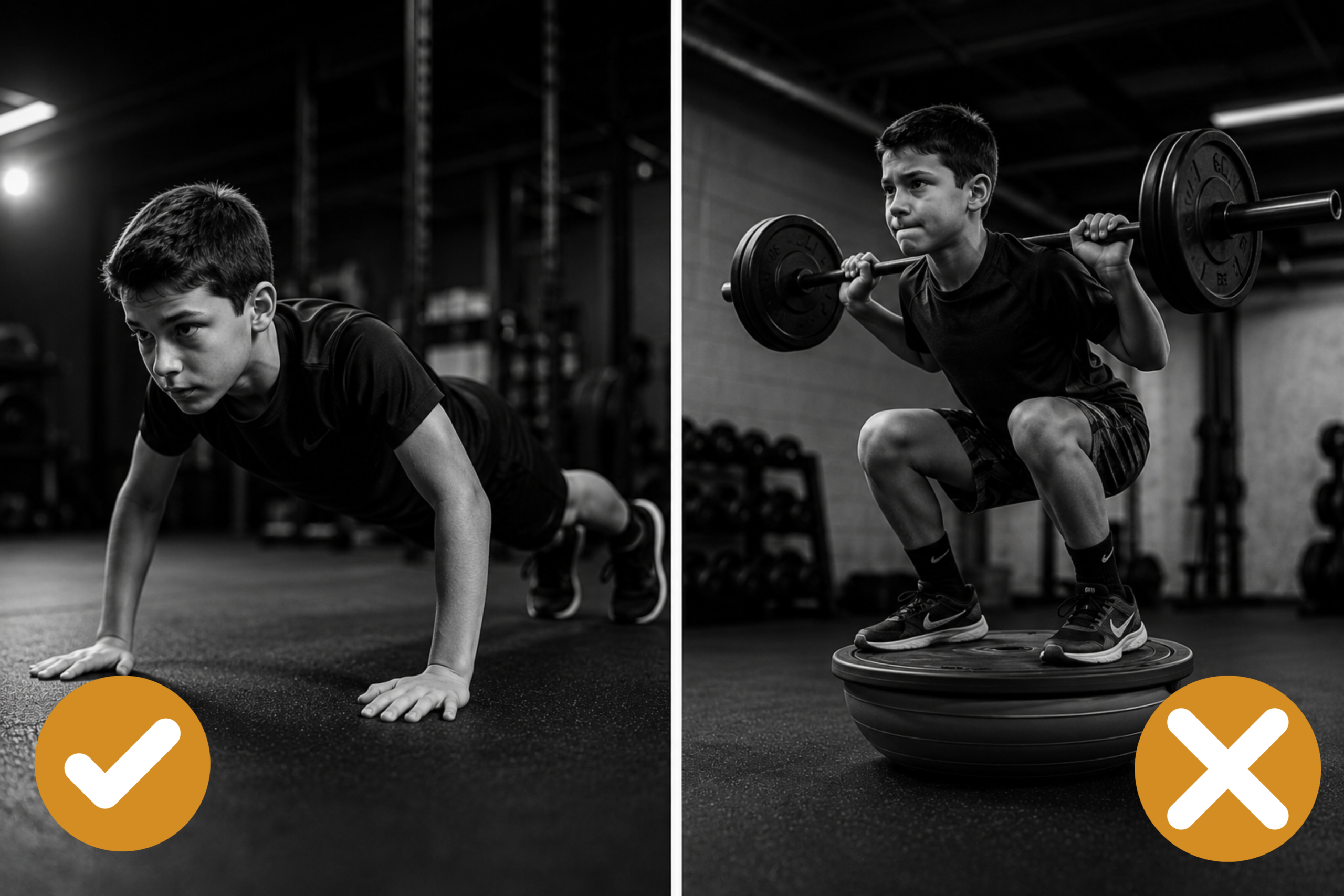
Young athletes are being pushed into box jumps, hurdle hops, depth jumps, and reactive drills before their bodies have the foundation to handle them. Plyometrics and explosive training require trunk stability, landing mechanics, eccentric control, and relative strength to be safe and effective.
Without that foundation, the body cannot efficiently produce force — because it cannot first absorb and stabilise it. A weak, unstable athlete trying to become explosive is like firing a cannon from a canoe. The force leaks everywhere.
Speed Before
Strength & Coordination
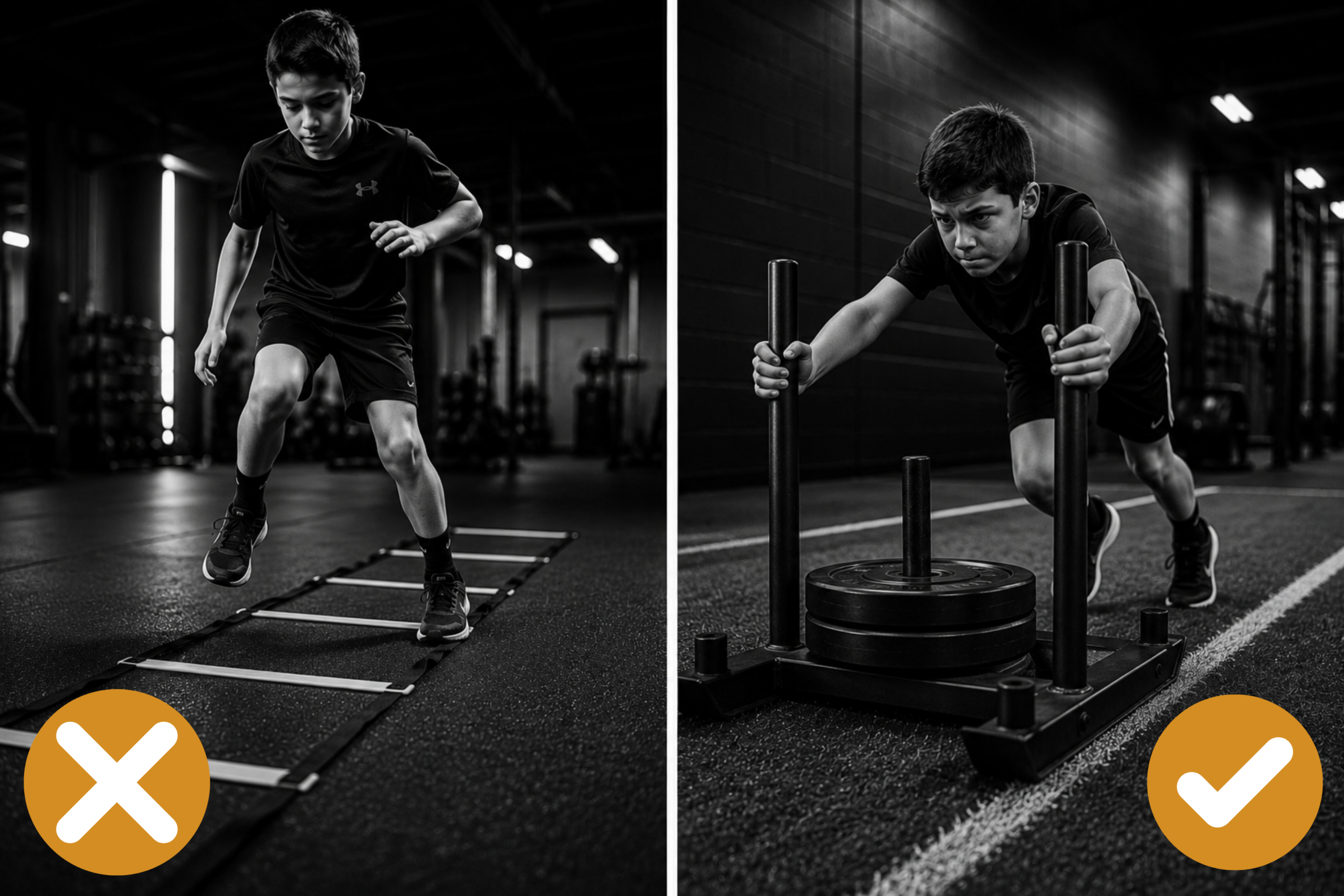
Everyone wants faster athletes. So coaches rush immediately into sprint drills, ladder work, resisted sprinting, and cone patterns. But speed is not a drill — it is an expression of force production and coordination. An athlete who is weak and poorly coordinated doesn’t get faster with speed work. They get faster at rehearsing poor mechanics.
Speed ladders are massively overused. They may improve foot rhythm slightly, but actual field speed relies on force production, posture, projection angles, mechanics, and relative strength — none of which a ladder develops.
“Simple done properly
beats flashy done poorly.“
The fundamentals don’t go viral. But they work. And the athletes who master them are the ones who are still developing — and still competing — long after the highlight-reel kids have burned out or broken down.
Training That Looks
Impressive Over
Training That Transfers
This is the social media era problem. Coaches are designing workouts for Instagram and TikTok — not for long-term athletic development. Unstable surface squats, BOSU-ball drills, reaction light circuits, and complex cone patterns look advanced. They rarely are.
Meanwhile, many young athletes still cannot squat properly, hinge, stabilise their trunk, lunge with control, land safely, or manage rotation. The fundamentals are being skipped because the fundamentals don’t get likes.
No Periodisation &
No Developmental
Understanding
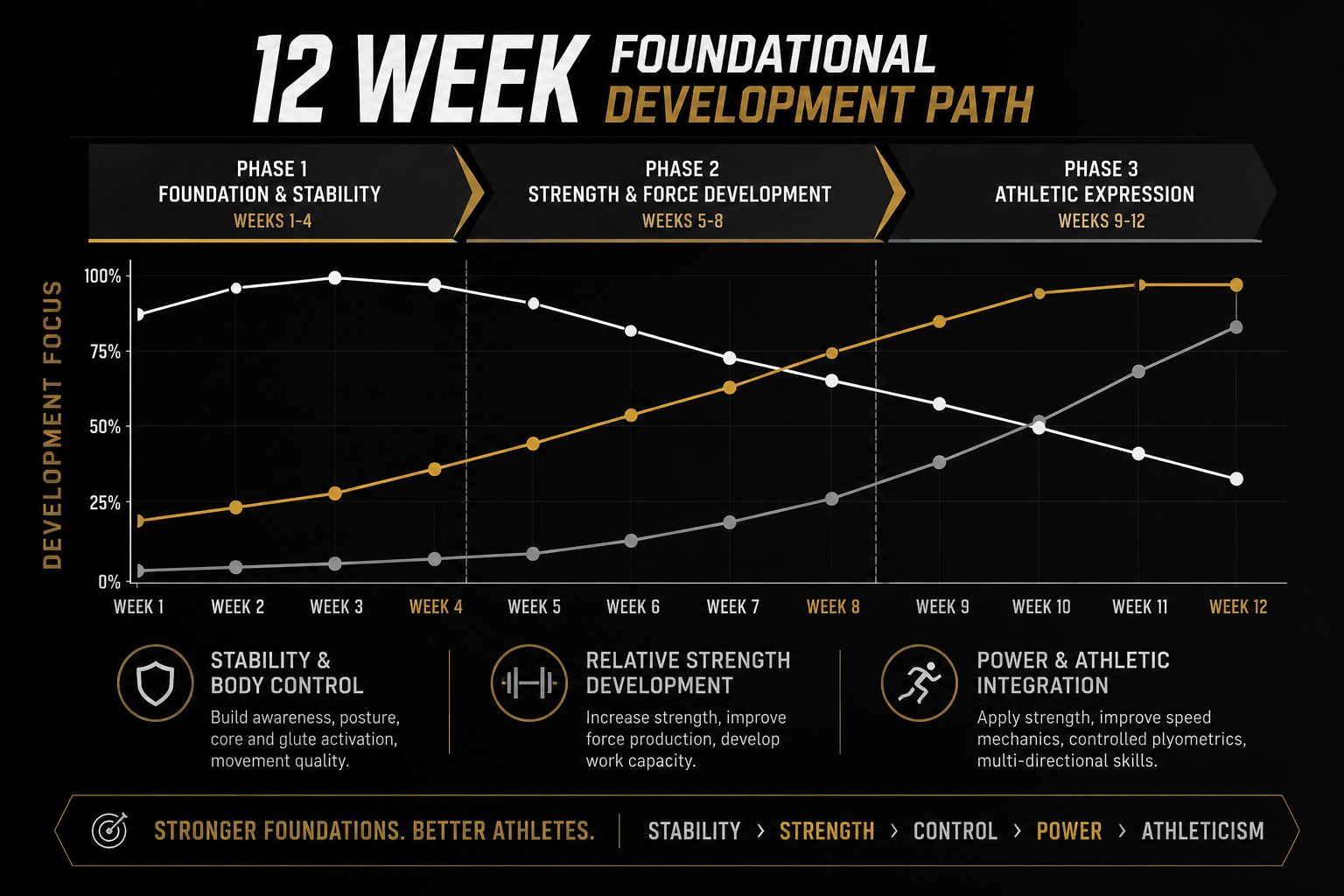
Many coaches train 11-year-olds and 17-year-olds with the same program. But young athletes are developing neurologically, hormonally, structurally, and emotionally at completely different stages. A proper developmental model understands growth spurts, coordination changes, training age, biological maturity, and adaptation windows.
Periodisation in youth development doesn’t mean bodybuilding phases. It means the training stimulus evolves based on where the athlete’s body actually is — their movement competency, strength levels, coordination capacity, and ability to adapt.
External Loads
Before Body
Awareness
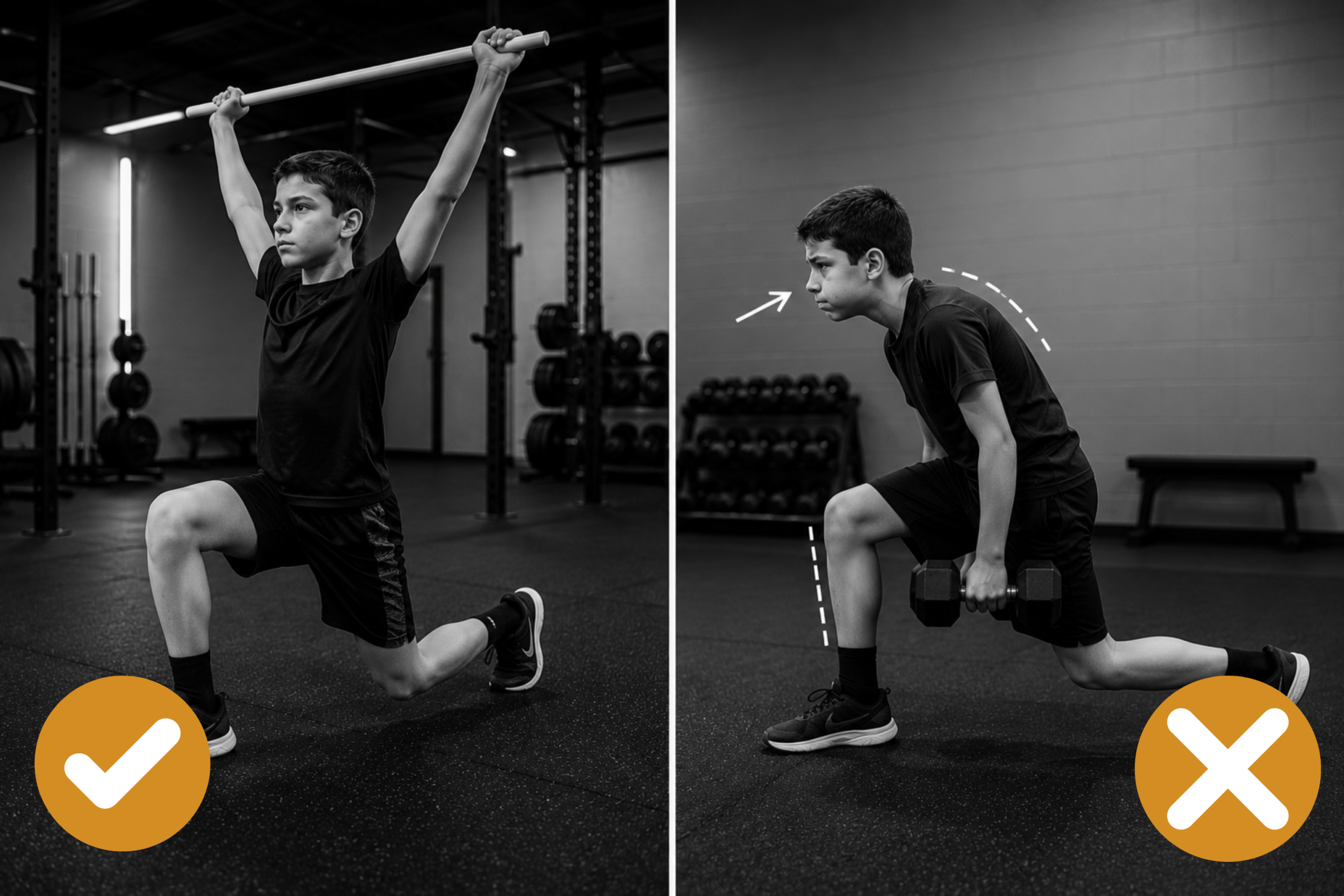
Kids are now playing one sport year-round, repeating the same movement patterns constantly, accumulating overuse, losing movement variability, and burning out — physically and mentally. Research increasingly supports broader athletic development and multi-directional movement early on, not hyper-specialisation before the body is ready.
The result is athletes who become sport-skilled but physically underdeveloped — good at their sport’s drill patterns, but lacking the foundational mobility, coordination, posterior chain strength, and movement quality that would make them genuinely better at that sport and far more durable over time.
What We See.
What We Do Differently.
Parents are beginning to notice. Injuries, burnout, anxiety, overtraining, and diminishing returns from hyper-specialised youth sports are becoming the norm. The athletes who avoid this are the ones in programs that prioritise development over performance, and quality over intensity.
At Total Athlete Development Systems, our entire model is built around getting this right — in the order it needs to happen, for bodies that are still growing.
Join the PADS Waitlist →- 01 Power Before Stability
- 02 Speed Before Strength & Coordination
- 03 Training That Looks Impressive Over What Transfers
- 04 No Periodisation or Developmental Understanding
- 05 External Loads Before Body Awareness
Your Athlete Deserves
Better Than This.
We’re building a program that gets the foundation right — so your athlete can compete harder, stay healthier, and keep developing long after the athletes trained the wrong way have plateaued.
Reserve a Spot on the Waitlist →